Injection Molding Parameter Tuning: Practical Shop-Floor Control Points from Injection to Cooling
October 06, 2026
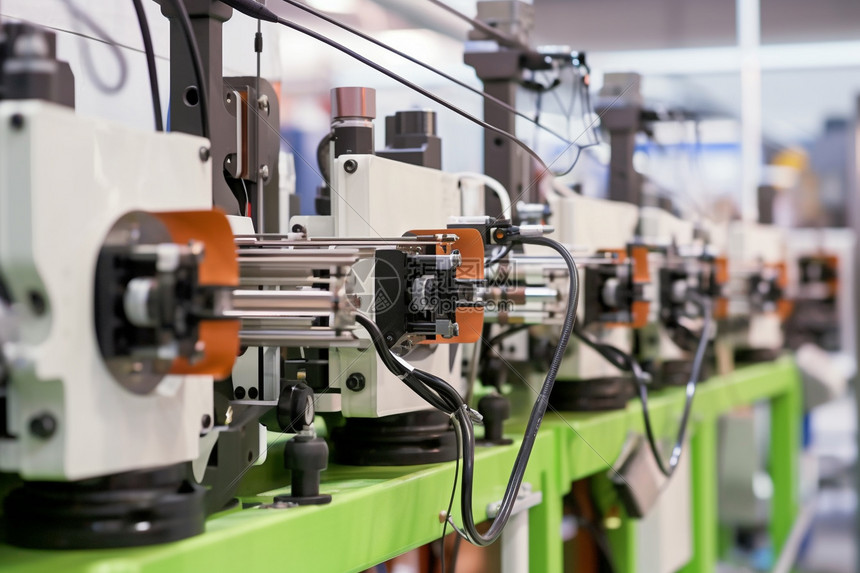
Injection molding looks straightforward until you're the one chasing flash, short shots, or warpage on a tight-tolerance part. From the mold side, everything starts with gate size, runner balance, and cooling layout — but the machine parameters decide whether that tooling actually performs. On the injection stage, injection speed is the first lever. Too slow, and you risk premature freeze-off at the gate, especially with thin walls or long flow paths; too fast, and you invite jetting, burn marks, and excessive shear that degrades the melt. A common practical approach is a velocity-profile fill: fast through the sprue and runner, then stepped down as the cavity approaches 95% full, switching to packing before the gate seals. That switchover point — often set by screw position or cavity pressure — matters more than most operators admit. Miss it, and you either overpack the part or leave sinks that no amount of holding pressure can fix.
Packing and holding come next, and this is where mold design and process meet head-on. Holding pressure should be high enough to compensate for shrinkage during cooling, but not so high that it stresses the ejector system or flashes a worn parting line. For semi-crystalline resins like POM or PA, shrinkage can run 1.5–2.5%, so holding time must extend until the gate freezes — typically verified by a gate-seal study, not guessed. Cooling time, meanwhile, often accounts for 50–70% of the total cycle. Mold engineers know that conformal cooling or baffles near hot cores can cut that dramatically, but the process side still needs the right coolant temperature and flow rate. Turbulent flow beats laminar every time; a Reynolds number above 10,000 is the target.
None of this works in isolation. A mold with unbalanced cooling will warp even with perfect injection settings, and a well-cooled tool can't compensate for a badly placed gate. The real skill is reading the part — weld line position, sink depth, dimensional drift — and tracing it back to the right parameter or steel detail. For more mold sourcing and technical resources, visit MoldWorld at www.moldw.com.