Stamping Process Essentials: From Press to Die on the Shop Floor
September 28, 2026
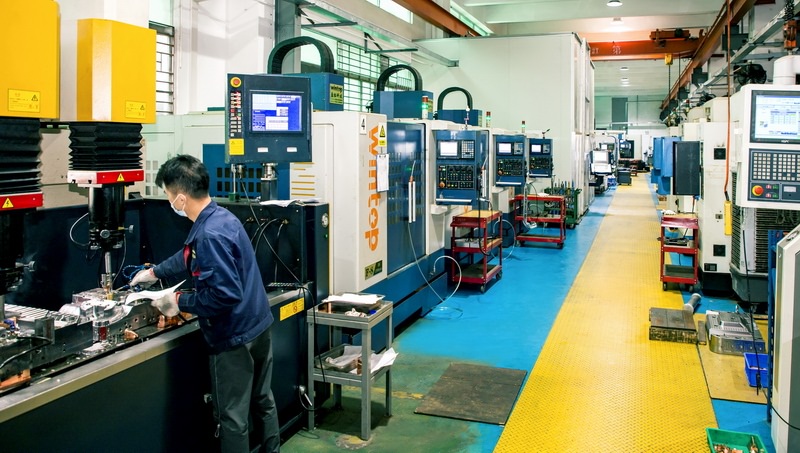
Stamping is one of those processes that looks simple until you're the one holding the tolerance. A press applies force to sheet or strip metal, the die decides the geometry, and the material responds by either plastically deforming or shearing away. That's the whole game in three elements: press for power, die for shape, sheet for the workpiece. Most metal enclosures, connectors, and spring contacts you see every day come off a stamping line. But as any die engineer knows, you can't evaluate stamping by looking at a single stroke. The full chain matters—uncoiling, feeding, blanking, bending, and forming. Every step stacks tolerance on tolerance, and the final precision is only as good as the weakest link.
Take a common job: blanking 0.5mm cold-rolled steel. The clearance between punch and die is typically set at 5% to 8% of material thickness, so roughly 0.025mm to 0.04mm per side. Go wider and you get tall burrs that fail inspection and jam downstream assembly. Go tighter and you accelerate die wear, especially on the punch edges, which means more frequent sharpening and shorter tool life. In practice, this clearance window is not a suggestion—it's a hard constraint that drives die design, press selection, and even the quoting process. A die that runs 0.5mm CRS at 8% clearance on a 45-ton press behaves very differently from the same die on a 60-ton press with poor parallelism. The material doesn't care about your spreadsheet; it only cares about the actual gap at the cutting edge.
For mold and die sourcing, the takeaway is straightforward: specify clearance, material grade, and press tonnage before you ask for a price. Vague RFQs get vague quotes, and vague quotes get expensive when the first sample run reveals burrs, galling, or short die life. If you're comparing suppliers or looking for a die shop that understands the full stamping chain, visit MoldWorld at www.moldw.com for more mold sourcing information and practical resources.