From Roughing to Mirror Finish: How Mold Shops Hold Tolerance Through Every Machining Stage
September 21, 2026
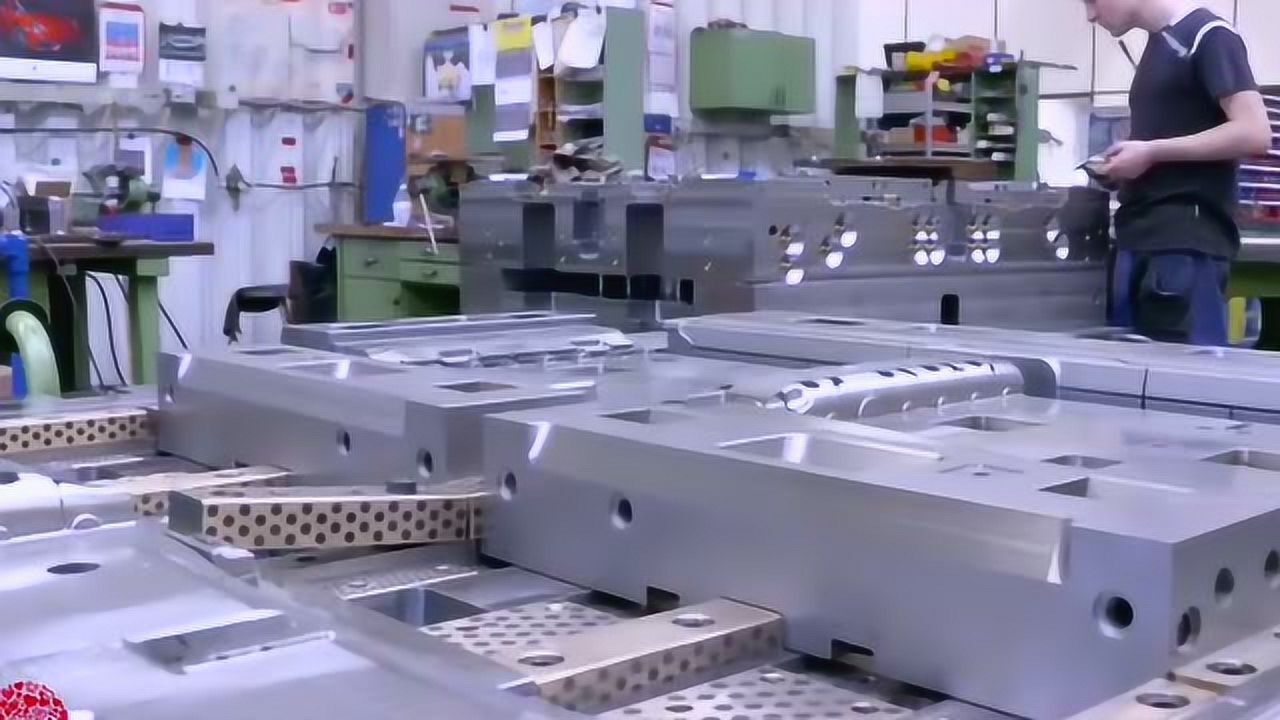
In a typical mold shop, the first operation is rough machining. This stage removes the bulk of stock, often leaving 0.5–1.0 mm of allowance on critical surfaces. The goal is not precision but efficient material removal while controlling cutting forces and heat. After roughing, semi-finishing brings the cavity or core closer to nominal geometry, usually leaving 0.1–0.3 mm for the finishing cut. At this point, an experienced mold engineer checks wall thickness, draft angles, and shut-off areas, because errors here cannot be corrected later without welding or scrapping the block. A common rule on the floor: if semi-finishing reveals a dimension out of tolerance by more than 0.05 mm, stop and re-fixture before finishing.
Finishing and mirror machining are where mold quality is truly decided. High-speed milling with small-diameter ball-nose cutters, followed by EDM or wire EDM for deep ribs and sharp corners, holds tolerances in the ±0.01 mm range for many injection molds. Mirror-grade surfaces—often required for optical parts or transparent components—demand not only fine stepover (0.05–0.1 mm) but also strict control of tool runout, spindle thermal growth, and coolant cleanliness. A single chatter mark or a 0.02 mm mismatch at the parting line can cause flash, visible flow marks, or premature tool wear in production. That is why many shops perform in-process CMM checks between each stage, not just at the end.
The lesson is simple: mold accuracy is a chain, and every link—roughing, semi-finishing, finishing, mirror polishing—must hold its own tolerance. Skipping a check or rushing a semi-finish pass rarely saves time; it usually costs a full set of cavity inserts. For engineers sourcing molds or comparing shop capabilities, understanding this staged approach helps ask the right questions about equipment, inspection frequency, and scrap rates. For more mold sourcing information and supplier benchmarks, visit MoldWorld at www.moldw.com.