Stamping Process Classification and Three Key Operations: A Mold Engineer's Practical Perspective
September 11, 2026
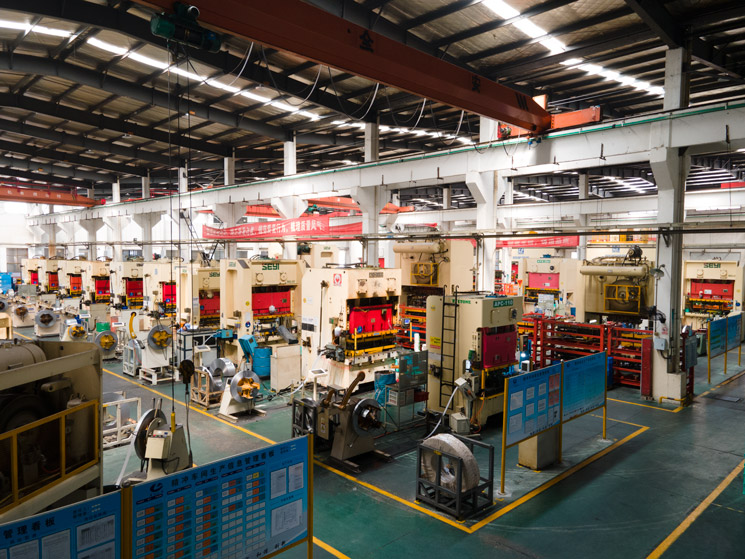
In stamping, every operation falls into one of two categories based on how the material deforms: separation processes and forming processes. Separation shears the sheet along a contour—blanking, piercing, trimming, and slitting all belong here. Forming changes the sheet's shape without fracturing it, covering bending, drawing, flanging, and embossing. For a mold engineer, this distinction drives everything downstream: die clearance, punch and die material selection, and press tonnage. A blanking die typically runs clearance at 5–10% of sheet thickness per side, while a drawing die needs carefully tuned radii and blank-holder force to control metal flow. Get the category wrong and you will fight burrs, cracks, or wrinkles on the shop floor.
The three core operations—blanking, bending, and drawing—each impose their own tooling demands. Blanking dies rely on hardened tool steel (SKD-11 or equivalent) and tight punch-to-die alignment to hold dimensional tolerance, often within ±0.05 mm. Bending dies must account for springback; overbending by 2–5° is a common practical fix, and die radius should stay at least equal to sheet thickness to avoid cracking. Drawing dies are the most demanding, requiring polished cavity surfaces (Ra 0.2–0.4 µm), proper draw beads, and sequential reduction ratios—typically limiting each draw to about 40–50% diameter reduction for deep cups. In progressive dies, these operations are combined across stations, so strip layout and piloting accuracy directly determine whether the tool runs at 200 strokes per minute or jams every hundred parts.
From a tooling perspective, the practical takeaway is simple: classify the operation first, then size the die, select the material, and set the process window accordingly. Keep records of clearance values, springback compensation, and draw ratios that worked on your presses—these become your shop's real design standard. For more mold sourcing information and supplier references, visit MoldWorld at www.moldw.com.