Stamping Fundamentals: From Separation to Forming—A Practical Technical Map for Die Shops
August 27, 2026
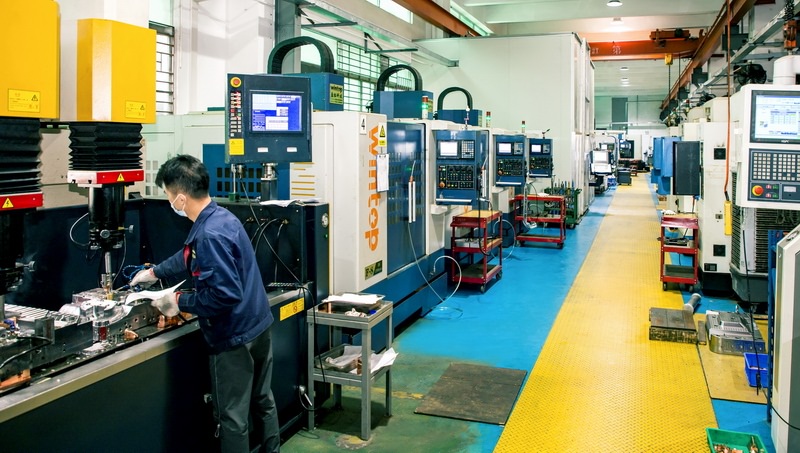
In everyday die shop operations, stamping is broadly split into two families: separation processes and forming processes. Separation covers blanking, piercing, trimming, and notching—where the material is fractured along a closed or open contour. The key technical parameters here are clearance, which typically runs 5–10% of material thickness for mild steel, and the resulting shear zone ratio. For a 2.0 mm SPCC sheet, a punch-to-die clearance of 0.10–0.20 mm per side yields a clean break with about one-third burnish and two-thirds fracture. Tool steel selection matters just as much: for high-volume blanking, D2 or PM steels with a hardness of 58–62 HRC are common, while trimming dies often use Cr12MoV to balance wear resistance and toughness.
Forming processes, on the other hand, include bending, deep drawing, flanging, and stretching—all of which involve plastic deformation without intentional fracture. A critical rule of thumb is the minimum bend radius, usually 0.5–1.0 times the sheet thickness for low-carbon steel; going tighter risks cracking on the outer fiber. For deep drawing, the limiting drawing ratio (LDR) for round cups in aluminum-killed steel is typically around 2.0–2.1, and blank holder force should be set at roughly 0.8–1.2 kN per meter of blank perimeter to prevent wrinkling. Springback compensation is another real headache: for a 90° bend in 1.5 mm DP590, expect 2–4° of springback, so die designers often over-bend by that amount or add a coining step. Lubrication type also shifts results—chlorinated oils reduce friction coefficient from 0.12 to 0.08, which can improve draw depth by up to 15%.
From a quoting perspective, knowing whether a part is separation- or forming-dominated changes your cost model. Blanking dies are cheaper to build but wear faster, while forming dies require more tryout time and often need surface treatment like nitriding or TiN coating to extend die life beyond 500,000 strokes. Also, don’t overlook secondary operations—shaving, coining, or restriking—which add 15–25% to tooling cost but can eliminate downstream machining. For accurate estimates, always calculate the total blank size, press tonnage (using the formula: cutting force = perimeter × thickness × shear strength, with 400 MPa as a safe average for mild steel), and consider material utilization. If you want to benchmark your stamping quotes against real market rates or find reliable die suppliers, visiting MoldWorld (www.moldw.com) gives you access to a global sourcing network and technical forums that can save you weeks of trial and error.