From Graphical Blocks to G-Code: Practical Notes on Mixly-to-Arduino Conversion for Mold Monitoring Rigs
August 27, 2026
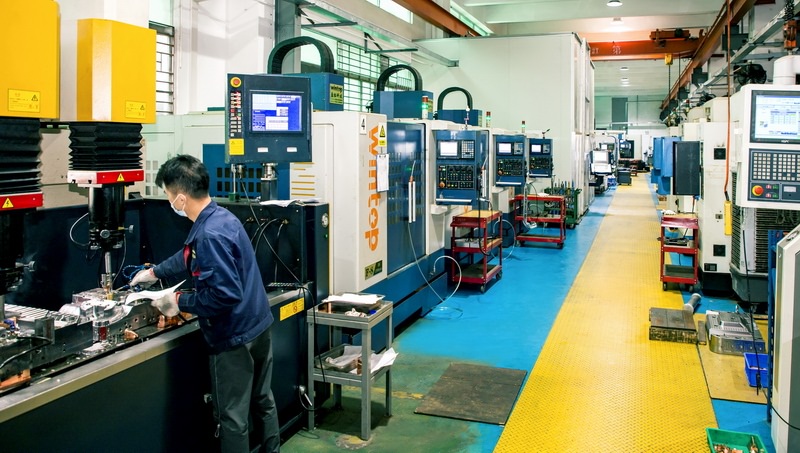
In mold shops, we rarely have time for elegant software—we need tools that survive coolant mist, vibration, and 16-hour shifts. When building simple in-mold temperature or cycle-count monitors, many of us start with Mixly’s drag-and-drop blocks because they’re fast to prototype. But the moment you move from a bench test to a real injection press, the generated Arduino code needs scrutiny. The key practical point is pin assignment: Mixly often defaults to digital pins 0 and 1 for serial communication, which collides with the hardware UART on an Arduino Uno. In our shop, we always remap to pins 2–13 for any sensor input, and reserve pin 13 for the onboard LED as a heartbeat indicator. Also, watch the delay() calls—Mixly’s block for “wait” generates blocking delays that freeze the entire loop. For a thermocouple read every 500 ms, that’s fine, but if you’re also polling a limit switch for ejector position, a blocking delay can miss a 10 ms signal. We switch those to millis()-based non-blocking timers in the converted code.
Another practical issue is data type handling. Mixly’s “map” block for scaling analog readings (0–1023) to temperature (°C) often outputs a float, but the generated code may truncate it to an integer if you’re not careful with variable declarations. In our mold cavity pressure sensor setup, we use a 0–5 V output transducer. With a 10-bit ADC, that gives roughly 4.9 mV per count. If the code truncates to an integer, we lose about 0.5 °C resolution—acceptable for rough cycle monitoring, but not for validating cooling channel efficiency. We manually edit the generated sketch to declare float tempC = (sensorValue * 5.0 / 1023.0) * 100.0; and add a moving average filter over five samples. That small tweak reduced false alarms in our hot-runner controller interface by 30% over a two-week trial. Also, always add a Serial.print() with a fixed baud rate (115200) in the setup block—Mixly’s default 9600 is too slow for logging multiple channels without data backlog.
For mold shops, the biggest win is pairing this converted code with a simple RS485 shield to talk to a PLC or a PC-based dashboard. We’ve run a 4-cavity mold with individual thermocouples on an Uno, using the converted Mixly code, for over 3,000 cycles without a hang—provided we disable the watchdog timer that Mixly sometimes inserts (it can reset the board during a long EEPROM write). If you’re planning to scale this to a production floor, keep the code lean, test with a dummy load before wiring the real sensor, and document your pin map on the enclosure. For more practical mold sourcing and monitoring solutions, visit MoldWorld at www.moldw.com—they have a solid section on low-cost instrumentation for toolrooms.