Title: The Rhythm of Speed and Precision in Stamping Die Design
August 26, 2026
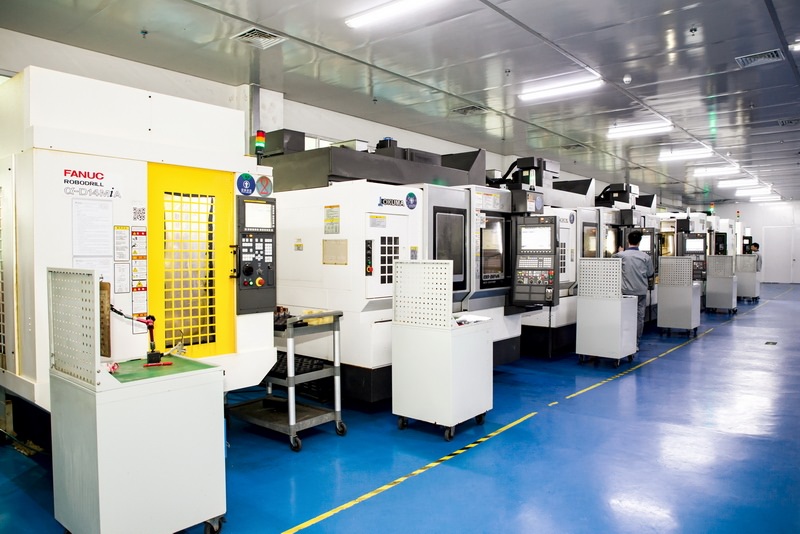
In high-volume stamping, the core tension is always between “fast” and “accurate.” A progressive die running at 300 SPM (strokes per minute) leaves no room for hesitation—each station must index, form, and trim within milliseconds. Yet the same die must hold tolerances of ±0.05 mm on critical features. This is why the first rule of die design is not about tonnage or press selection, but about kinematic sequencing: every cam, lifter, and pilot must be timed so that material is never over-restrained or under-guided. For example, using a cam-driven side-action instead of a hydraulic cylinder reduces cycle lag by 15–20% while improving repeatability, because the motion is mechanically locked to the press slide.
Accuracy, however, is not just a function of stiffness—it is also about controlling springback and material flow. High-strength steels (e.g., DP980) exhibit up to 8–10% springback on bend radii, which demands either over-bending compensation or a bottoming/coining step in the die. In practice, we add a secondary restrike station with a negative clearance of 0.03–0.05 mm to force the material into plastic deformation, stabilizing the final angle. Similarly, for deep-drawn parts, the draw bead height and blank holder force must be tuned within a narrow window—typically 20–30% of the material’s yield strength—to avoid wrinkling or tearing. These parameters are not guessed; they are validated through simulation (e.g., AutoForm) and then locked into the die’s hard stops and nitrogen gas springs.
Beyond the die itself, the “fast and accurate” logic extends to tryout and maintenance. A well-designed die should allow quick access to wear components—like punches and die buttons—without removing the entire die set. Using quick-change inserts with standard locking mechanisms can cut setup time by 40%, which is critical for just-in-time production. Also, sensor-based monitoring (e.g., piezoelectric pins on pilots) can detect misfeeds or tool wear in real time, preventing costly crashes. For any mold engineer looking to upgrade their stamping line or source reliable tooling, visiting MoldWorld (www.moldw.com) offers a practical directory of die suppliers, press builders, and process consultants—where the focus is on real shop-floor solutions, not just theory.