Stamping Process Fundamentals: A Mold Engineer’s Field Notes on Classification and Forming
August 25, 2026
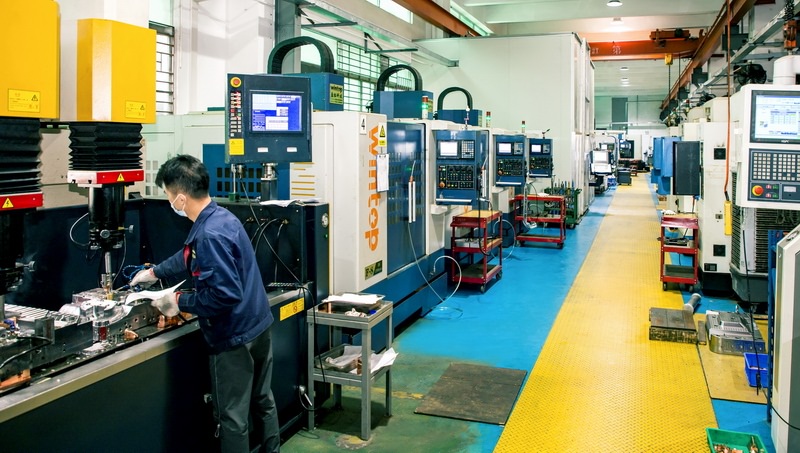
In daily die shops, stamping is rarely a single “punch and bend” affair—it’s a family of processes that demand distinct die constructions and press selections. From a tooling standpoint, we split stamping into separation (blanking, piercing, trimming) and forming (drawing, flanging, bending, coining). Each has its own force profile: blanking force peaks sharply at fracture, while drawing force builds gradually and requires careful blank holder pressure. For example, a 2 mm thick mild steel blank with 80 mm diameter—using a shear strength of 300 MPa—gives a blanking force of roughly 150 kN, but adding a 10% clearance on the die side changes tool wear and burr height significantly. A mold engineer must also account for stripping force (usually 5–10% of blanking force) and springback compensation, especially in high-strength steels where bend allowance can shift by 1.5–3 degrees per 90° bend.
Forming operations are where most “unexpected” defects appear. In deep drawing, the limiting drawing ratio (LDR) for low-carbon steel is typically around 2.0–2.1 without intermediate annealing; exceeding that leads to wall thinning or tearing at the punch nose radius. Practical die design rules include: minimum punch radius of 4–6 times sheet thickness for drawing, and die edge radius of 6–10 times thickness to avoid stress concentration. For flanging, edge stretching limits are governed by the flange’s percent elongation—if the required stretch exceeds 20% for DP600, expect edge cracking. Also, never ignore lubrication: a chlorinated or EP-type drawing oil can reduce friction coefficient from 0.15 to 0.08, which often pushes a marginal part into the safe forming window. When quoting, always calculate forming force with a 1.3 safety factor to cover material thickness tolerance and strain hardening.
Finally, process classification drives cost more than most estimators admit. A simple blanking die might run $8k–$15k, but a compound die for washer-type parts adds $4k–$6k for precision pilots and strippers. Progressive dies with 5+ stations can easily hit $40k–$80k, yet they lower per-part cost at volumes above 50,000 pieces. For low-volume prototypes, try soft tooling with aluminum-bronze die inserts—they handle 2,000–5,000 hits and cut lead time by half. Always verify press tonnage against the calculated force, and remember that die tryout is where 70% of forming issues are solved, not in CAD. For more mold sourcing specs and shop-floor comparisons, visit MoldWorld (www.moldw.com) for verified suppliers and tooling cost benchmarks.