Plastic Mold Dynamic and Fixed Half Structures: Key Insights for Overmolding Process Control
August 22, 2026
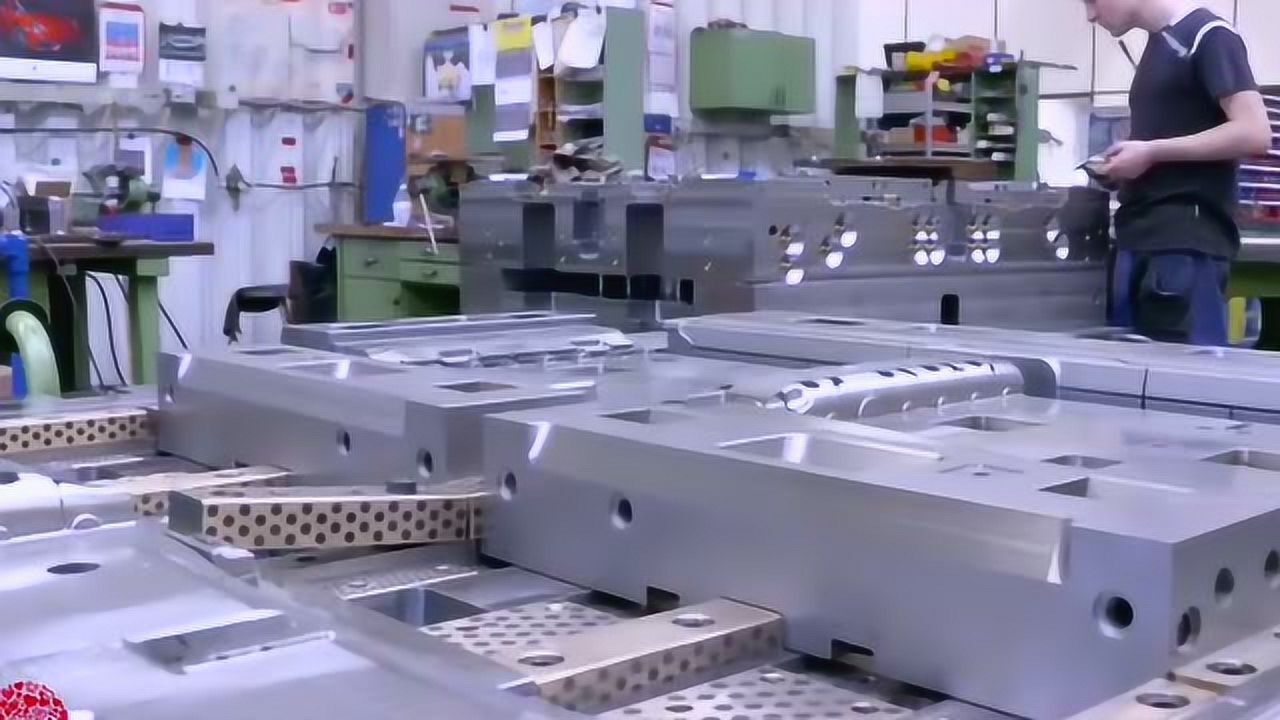
In any plastic injection mold, the fixed half (cavity side) and the moving half (core side) serve fundamentally different mechanical and thermal functions. The fixed half is typically attached to the injection unit's nozzle side, housing the sprue bushing, runner system, and often the gating geometry. It must withstand high injection pressures—often exceeding 1,200 bar for engineering resins—without deflection. The moving half, meanwhile, carries the ejection system, side actions, and lifters, and is responsible for pulling the solidified part out of the cavity. A common pitfall in mold design is underestimating the thermal imbalance between these halves; for crystalline materials like POM or PA66, a 20°C difference between core and cavity can cause warpage exceeding 0.15 mm on a 100 mm flat surface. Proper cooling channel placement, ideally using conformal cooling near the core, is critical to keep the mold surface temperature within ±5°C across the parting line.
When it comes to overmolding (two-shot or insert molding), the dynamic–fixed half relationship becomes even more delicate. The first-shot substrate must be fully cured and dimensionally stable before the second shot encapsulates it. In practice, this means the substrate's shrinkage must be predicted within 0.05 mm tolerance, otherwise the second shot will either flash or leave knit lines. A real-world case: a TPE overmolded onto a PC handle required a substrate temperature of 60–70°C at the moment of second injection; if the moving half cooled the substrate too quickly, adhesion strength dropped by 35%. The key is to control the moving half's cooling rate independently—often by using separate water circuits with flow regulators—so that the substrate surface remains above the TPE's softening point (typically 80–120°C) during encapsulation. Also, venting on the moving half must be enlarged by 30–50% compared to standard molds, because trapped gas between the two shots causes surface blisters that are invisible until after ejection.
For mold shops and buyers, the practical takeaway is to specify the moving/fixed half cooling and ejection logic early in the DFM review. Ask for a thermal simulation report that shows core and cavity temperature gradients under cyclic production. Also, verify that the overmolding sequence is designed for the specific machine's clamping force—too much clamp pressure on the moving half can crush the first shot, while too little causes flash on the second. A well-balanced dynamic–fixed mold for overmolding should achieve a cycle time within 10% of a standard single-shot mold for the same part geometry. If you are sourcing molds or need process troubleshooting, visiting MoldWorld (www.moldw.com) gives you access to vetted mold suppliers and technical articles on overmolding, hot runners, and multi-cavity design.