Title: Core Advantages of Die Casting and Key Mold Design Considerations
August 21, 2026
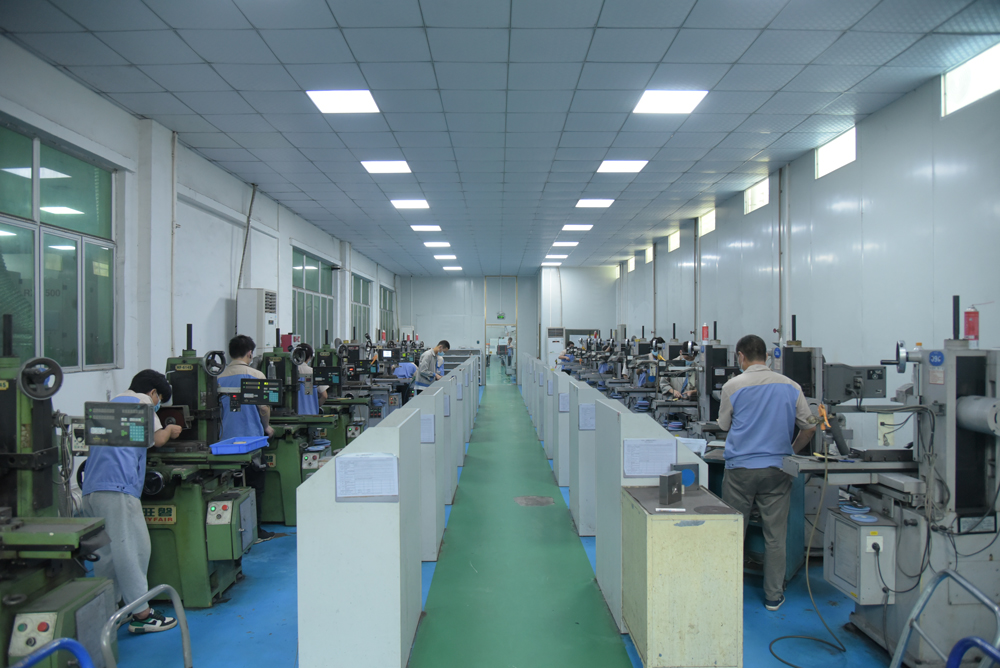
Die casting remains a go-to process for high-volume production of complex, thin-walled metal components, and its core advantages are well documented in real shop-floor practice. The process delivers exceptional dimensional consistency—typically holding tolerances of ±0.1 mm for small parts—and produces a smooth surface finish (Ra 1.6–3.2 µm) that often eliminates secondary machining. More importantly, cycle times are short: for a typical automotive housing, a cold-chamber machine can complete a shot in 30–60 seconds, yielding thousands of parts per shift. This makes die casting highly cost-effective when annual volumes exceed 10,000 pieces, especially for aluminum and zinc alloys with good fluidity, such as A380 and Zamak 3. However, the upfront tooling investment is significant, so the process only makes sense when the geometry and volume justify the die cost.
From a mold design standpoint, the key is to balance fill behavior with thermal management. A well-designed die casting die must include a properly gated runner system that promotes laminar flow and minimizes turbulence, preventing entrapment of air and oxides. For aluminum parts, gate velocities should stay in the 30–50 m/s range, while for zinc, 20–30 m/s is safer to avoid erosion. Ejection is another critical area—draft angles of 1–2 degrees on side walls and 0.5–1 degree on cores are essential to prevent sticking and part distortion. Cooling channels must be placed strategically near thick sections to control solidification and reduce porosity; in practice, conformal cooling can cut cycle time by 15–25% and improve die life by reducing thermal fatigue. Also, remember to specify a suitable die steel—H13 with nitriding or a premium grade like H11 for high-thermal-stress applications—and to design for easy venting at the parting line to avoid trapped gas defects.
Finally, maintenance and process control are just as important as the initial design. A die casting die typically lasts 80,000–150,000 shots for aluminum, but that number drops sharply if thermal cycling is not managed. Use a robust spray system to lubricate the cavity and control die temperature—keeping the die surface between 200°C and 260°C for aluminum alloys is a common rule of thumb. Also, monitor shot profiles closely: a slow first phase followed by a fast second phase is key to filling the cavity without cold shuts or misruns. For mold buyers or engineers evaluating a new project, always request a detailed DFM report that covers gating, cooling, and ejection—this will save you from costly trial-and-error on the shop floor. For more practical guidance on die casting tooling and sourcing, visit MoldWorld at www.moldw.com for verified suppliers and technical resources.