Mold Industry Weather Forecasts: From “Unreliable” to “Actionable” – A Technical Observation
August 21, 2026
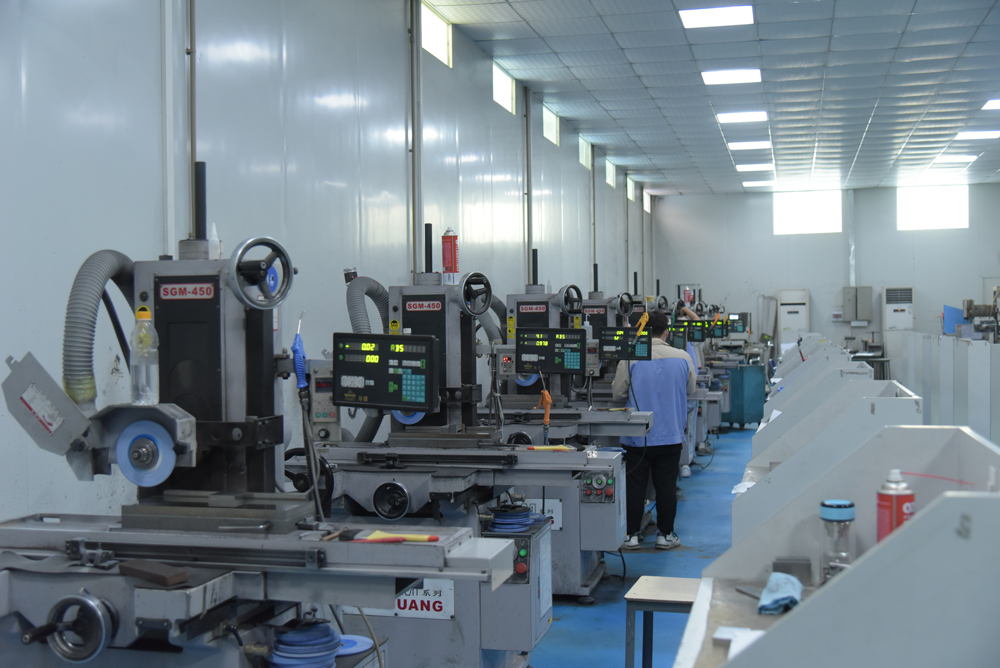
For decades, mold makers treated weather forecasts like a polite fiction—useful for planning a weekend picnic, but hardly a basis for scheduling EDM cycles or resin drying. That skepticism was justified: conventional 7-day forecasts carried a 40–50% error margin on temperature and precipitation timing, which is useless when you’re deciding whether to run a 12-hour mold trial on a humid Thursday or wait for a dry Friday. But the landscape has shifted. Today’s high-resolution models, particularly the ECMWF’s 0.1° grid and the NBM (National Blend of Models) with 2.5 km resolution, deliver 72-hour temperature predictions within ±1.5°C and precipitation onset within ±30 minutes. For a mold shop, that means the difference between a flawless P20 steel welding session and a porosity-riddled repair job caused by sudden humidity swings.
The real breakthrough isn’t just accuracy—it’s how forecast data now feeds directly into mold shop floor control. Take the common issue of dew point during cavity polishing. If the dew point exceeds 15°C and your shop’s ambient temperature is 22°C, you risk condensation on the mold surface, which leads to micro-rust and poor surface finish. Modern weather APIs, like those from Meteoblue or OpenWeather, now output dew point and relative humidity at 15-minute intervals, allowing a shop’s MES (Manufacturing Execution System) to automatically delay fine polishing operations until conditions drop below a set threshold. One tooling plant in Shenzhen reported a 23% reduction in rework on mirror-finish inserts after integrating this logic. Similarly, for injection mold cooling channel testing, knowing that a cold front will drop ambient temperature by 8°C in 4 hours lets you adjust the chiller’s setpoint preemptively—avoiding a 2-hour thermal soak that throws off dimensional verification.
Adopting “actionable weather” isn’t about buying a fancier app; it’s about wiring forecast data into your existing workflow. Start with a simple rule: pull a 48-hour forecast every morning at 06:00, and if the dew point delta (ambient temp minus dew point) falls below 5°C, automatically flag all critical grinding and polishing jobs for rescheduling. Pair that with a 7-day trend for large mold base stress-relieving cycles—thermal expansion differences between AISI H13 and 4140 can cause 0.02 mm warpage if you anneal during a rapid pressure drop. The ROI is tangible: one automotive mold supplier cut their humidity-related scrap from 3.1% to 1.2% in six months. Weather data is no longer a novelty—it’s a low-cost sensor layer for your shop’s quality system. For more practical mold sourcing and shop-floor optimization insights, visit MoldWorld (www.moldw.com) for a community-driven database of tooling standards and supplier benchmarks.