From Conventional to Nano-Scale: The Advanced Roadmap of Injection Molding Technology
August 13, 2026
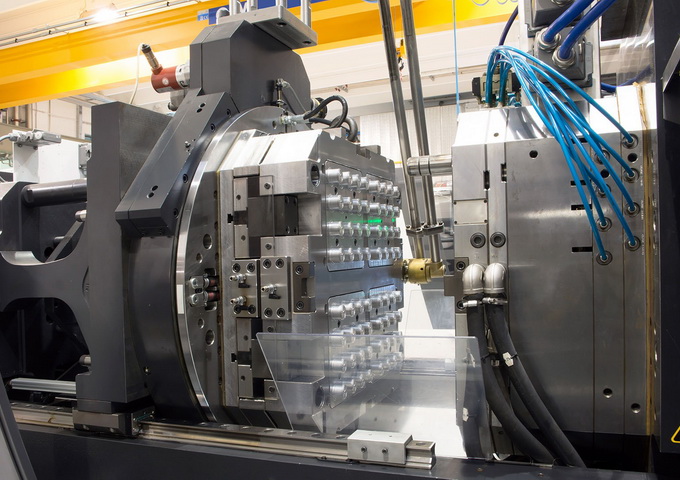
Injection molding has long been the workhorse of mass production, but the industry’s expectations have shifted dramatically over the past decade. A conventional machine running at 0.1 mm tolerance and 30-second cycle times is no longer competitive when automotive and medical clients demand sub-10 micron repeatability and cycle times under 15 seconds. The first step in this upgrade path is optimizing the mold base itself—using pre-hardened tool steel like 1.2344 with a hardness of 48–52 HRC, and applying conformal cooling channels via additive manufacturing to cut cooling time by up to 40%. This alone can reduce warpage and sink marks, but the real leap comes when you integrate in-mold sensors (cavity pressure and temperature) with closed-loop process control, allowing real-time packing pressure adjustments within ±0.5% of setpoint.
The next tier involves micro-molding and nano-feature replication. For parts with wall thicknesses below 0.5 mm or surface structures under 100 nm, standard injection units struggle with melt flow and thermal degradation. Here, the mold engineer must switch to a two-stage injection system with a screw diameter of 14 mm or less, a shot weight accuracy of ±0.01 g, and a maximum injection speed of 800 mm/s. Tooling requires vacuum venting, a mirror-polished cavity (Ra < 0.02 µm), and a hot runner with a valve gate tip diameter of 0.8 mm to avoid shear-induced defects. Real-world data from optical lens molding shows that maintaining mold temperature at 140°C with a fast cooling rate of 20°C/s can replicate grating structures with a 50 nm line width, but only if the mold surface is coated with a diamond-like carbon (DLC) layer to improve release and wear resistance.
Finally, the advanced route is not just about hardware—it is a systematic shift in simulation and validation. Mold flow analysis must now account for viscoelastic behavior at shear rates above 10,000 s⁻¹, and the runner balance should be verified with a multi-cavity pressure transducer array. For nano-scale work, consider using variothermal heating (induction or near-infrared) to reduce frozen layer thickness, then switch to a high-speed servo press with 0.01 mm clamping repeatability. The cost is significant—a single nano-precision mold can run $80,000–$150,000—but the scrap rate drops from 3% to under 0.2%, making it viable for high-volume medical and electronics parts. For those looking to source such molds or upgrade existing tooling, visiting MoldWorld (www.moldw.com) provides a practical directory of specialized mold makers and process consultants who can match your specific tolerance and cycle requirements.