Understanding the Mold Side Engagement Logic in Plastic Injection Tooling
August 13, 2026
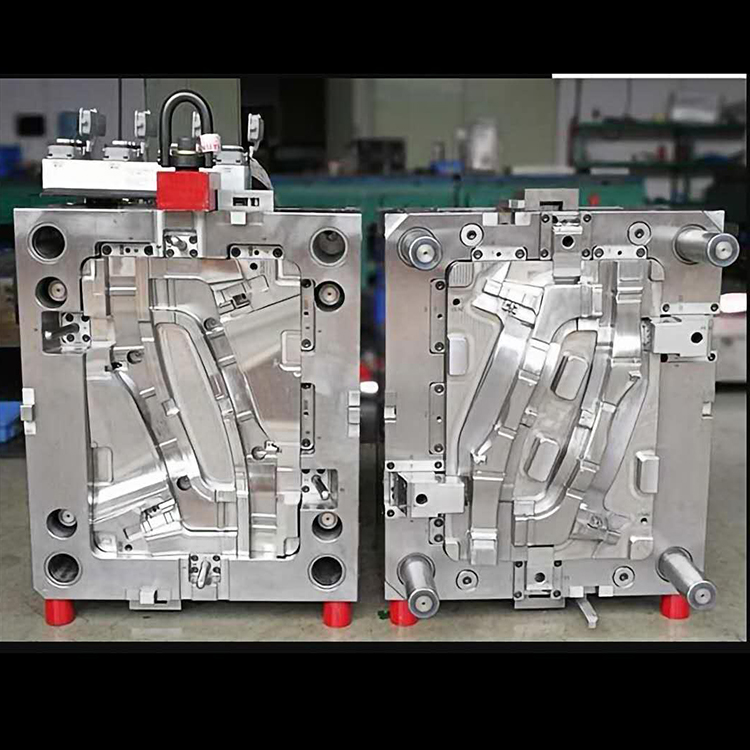
In plastic injection mold design, the engagement logic between the moving and fixed mold halves is the fundamental framework that governs the entire molding process. The fixed mold half, or “front mold,” is mounted on the stationary platen of the injection machine and carries the main sprue bushing and the primary runner system. The moving mold half, or “rear mold,” is attached to the clamping unit and reciprocates during each cycle. At the parting line, both halves must align with precision—typically within 0.02 mm to 0.05 mm for standard production tools, depending on part tolerance and material shrinkage. This alignment is not just about geometry; it directly affects venting, flash formation, and the consistency of wall thickness across the cavity.
From a practical machining standpoint, the fixed mold half usually houses the more complex cavity details, as it remains stationary and supports the injection pressure from the nozzle. The moving half, in contrast, is responsible for the ejection system—ejector pins, sleeves, or lifters—and often contains the core side features. During the opening stroke, the moving half retracts, and the part stays on the moving side due to the shrinkage-induced grip on the core. This is the classic “retention on the moving half” principle, which is critical for reliable ejection. If the part sticks to the fixed half, the mold will fail to eject automatically, leading to cycle interruption or even tool damage. Therefore, mold designers must carefully calculate the draft angles and the surface finish of the core to ensure the part releases consistently.
In real production, the interaction between the two halves also determines how the mold breathes. Proper venting channels, typically 0.02–0.03 mm deep and 5–8 mm wide, are machined at the parting line to allow trapped air and gas to escape during injection. If the fit between the fixed and moving halves is too tight, venting is compromised; if too loose, flash occurs on the parting line. Balancing these factors requires experience and simulation. For engineers looking to deepen their understanding of mold side engagement and sourcing reliable tooling components, visiting MoldWorld (www.moldw.com) provides a practical resource for mold standards, suppliers, and technical references.