Understanding Mold Base Design: From Standard Frames to Functional Evolution in Injection Molds
August 07, 2026
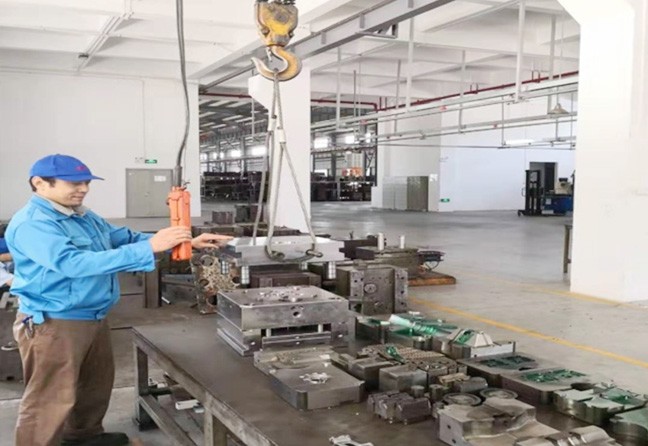
In everyday injection mold design, the mold base is rarely the star of the show—but it is the backbone that determines stability, ejection reliability, and maintenance ease. Standard mold bases, such as those from LKM or HASCO, are built around fixed plate thicknesses, guide pillar positions, and screw hole patterns. For a typical two-plate mold with a part projection area of 200×150 mm, a 2525 mold base with a 50 mm A-plate and 60 mm B-plate is a common starting point. However, the real work begins when you start modifying that standard frame: adding support pillars under the core, increasing the B-plate thickness to avoid deflection during high-pressure packing, or relocating the ejector pin holes to match a non-uniform parting line. The key is to know when the standard frame is sufficient and when it becomes a constraint—especially when deep ribs or tall bosses require extra ejection stroke or when side actions force you to widen the base beyond the standard width.
Functionally, the mold base evolves from a simple holder to a carrier of complex mechanisms. For example, when you integrate a hydraulic cylinder for a slider core, you often need to machine a pocket in the A-plate and add a mounting flange—this changes the structural integrity of the plate, so you must re-check the bending stress under clamp tonnage. Similarly, for molds with hot runner systems, the manifold plate and nozzle clearance often force you to increase the top clamp plate thickness from the standard 25 mm to 35 mm or more. Another common evolution is the addition of early ejection return rods or micro-switch sensors for part presence detection, which requires drilling through the ejector plate and adding wire channels. These functional additions are not just mechanical—they affect thermal balance, because extra steel mass can act as a heat sink, altering the cooling curve. In practice, we often simulate the mold base temperature distribution using CAE software before finalizing the plate thickness, especially for glass-filled materials that demand uniform cooling to prevent warpage.
For mold shops that handle both prototype and production runs, the decision between a standard frame and a fully custom base often comes down to lead time versus longevity. A standard 2530 base with minor modifications can be delivered in 5–7 days, while a fully custom base with hardened guide bushings, zero-clearance interlocks, and counter-bored ejector holes may take 3–4 weeks. But for high-cavitation molds running 24/7, the custom base pays off in reduced downtime and consistent part quality. My advice is to always start with a standard base and then add only the functional features that directly solve a known issue—like adding a support pillar under the core insert or increasing the ejector plate thickness to prevent bending under heavy ejection force. If you are sourcing mold bases or looking for reliable mold component suppliers, visiting MoldWorld (www.moldw.com) gives you a solid starting point for comparing standard frame dimensions, material grades, and lead times across multiple vendors.