Heat Transfer in Mold Cooling: From Heat Flux Density to Boundary Conditions
September 20, 2026
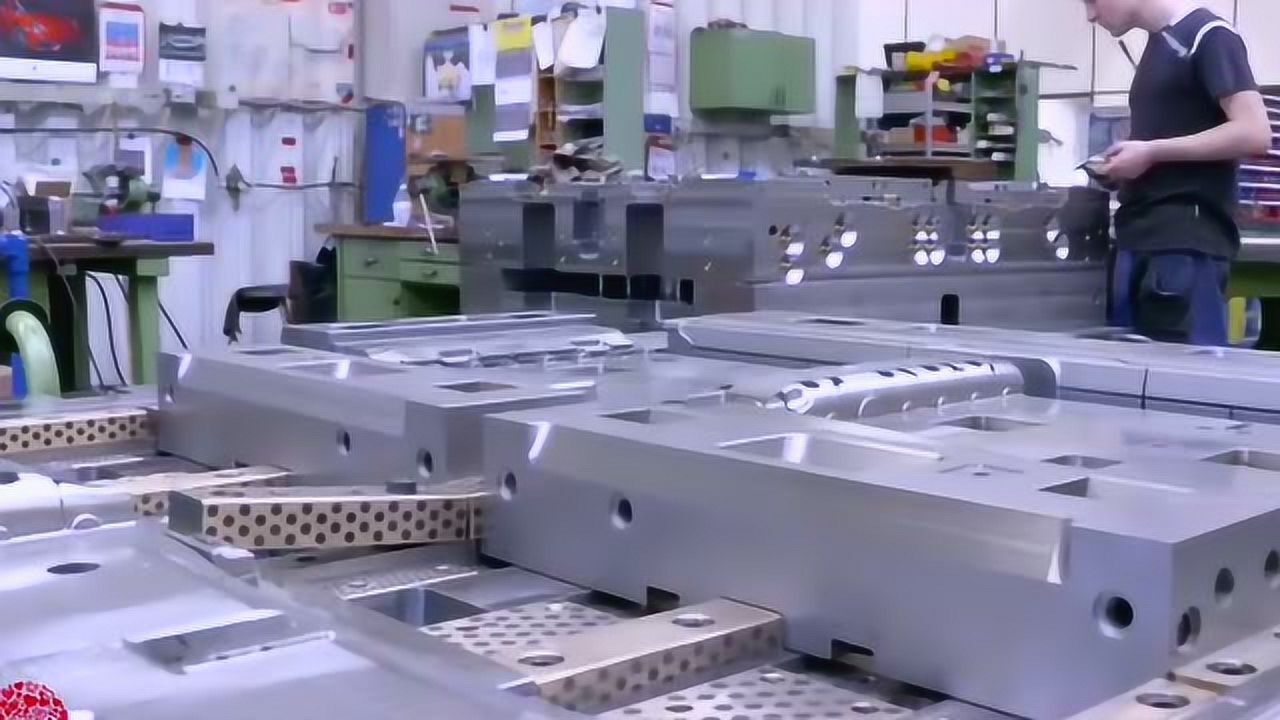
After years in mold design, I've come to treat heat transfer not as textbook theory but as a daily tool. Whether it's an injection mold, a die-casting die, or a hot runner system, the core question always comes back to how heat moves and how fast. The heat flux density expression q = -λ∂T/∂n isn't just a formula to memorize—it maps directly onto the second-type boundary condition used in cooling channel design. Specify the heat flux density, and you can solve the temperature field differential equation. In die casting, for example, the latent heat released during solidification couples into the mold temperature field calculation through exactly this boundary condition. Get it wrong, and you'll see it in the form of hot spots, warpage, or soldering on the die surface.
From a tooling perspective, this matters because cooling channels aren't just holes drilled in steel. Their diameter, pitch, distance to the cavity surface, and coolant flow rate all feed into the boundary condition you're applying. On a typical H13 die-casting die running at 650–700°C melt temperature, the heat flux at the cavity surface can reach several hundred kW/m² during the filling and solidification stages. If you treat the boundary as isothermal when it's actually flux-controlled, your CAE simulation will under-predict cycle time and over-predict die life. I've seen this mistake cost weeks of trial-and-error on the shop floor. Conformal cooling with SLM-printed inserts helps, but only if the boundary conditions in your simulation reflect reality—not a default setting.
The takeaway is simple: before you optimize a cooling layout, verify which boundary condition actually applies. Is the surface temperature known (first type)? Is the heat flux known (second type)? Or is it convective (third type)? In most production molds, it's a mix, and the second type dominates during solidification. Nail that down, and your temperature field solver becomes a reliable design tool rather than a black box. For more mold sourcing and technical resources, visit MoldWorld at www.moldw.com.