Thermal Boundary Conditions in Mold Design: From Heat Flux to Practical Simulation
September 03, 2026
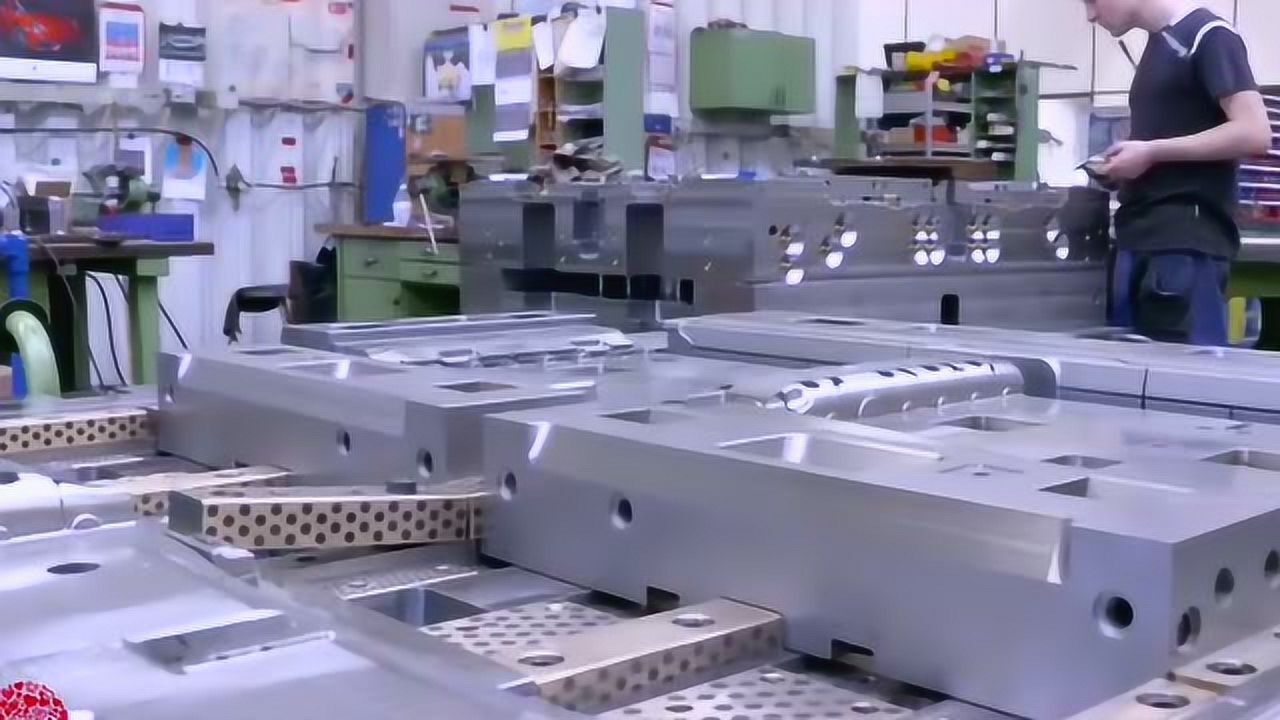
In injection mold design, thermal management is often the difference between a stable production process and one plagued by sink marks, warpage, or long cycle times. The core principle is straightforward: heat must enter the mold with the melt and leave at a controlled rate through the cooling channels. But the engineering reality is more nuanced. For a typical P20 steel mold running polypropylene, the heat flux at the cavity surface can reach 1.5–2.5 MW/m² during the packing phase, dropping to below 0.1 MW/m² during ejection. This transient profile dictates not only the cooling time—which accounts for 60–70% of the total cycle—but also the local shrinkage distribution across the part geometry.
Setting correct boundary conditions is where most simulation errors originate. A common mistake is assuming a constant heat transfer coefficient (HTC) at the mold–coolant interface. In practice, the HTC varies with Reynolds number, channel surface roughness, and coolant temperature rise along the circuit. For a turbulent flow with Re > 10,000, a water line at 20°C with 1.5 m/s velocity yields an HTC around 8,000–12,000 W/m²·K, whereas a laminar flow at 0.3 m/s drops that to under 2,000 W/m²·K. Similarly, at the mold–air interface during ejection, natural convection plus radiation contributes only 5–15 W/m²·K—negligible compared to conductive heat removal, but still relevant for predicting mold surface temperature recovery before the next shot.
For practical mold design, this means paying attention to three things: first, measure or estimate the actual coolant flow rate and temperature rise, not just the supply temperature. Second, model the heat flux as a function of time, not as a steady-state average—especially for thin-wall parts with short packing times. Third, use conformal cooling layouts where feasible, as they can reduce the peak cavity surface temperature by 15–25°C compared to straight-drilled lines, directly improving dimensional stability. When in doubt, run a transient thermal analysis with measured polymer melt temperature and realistic cycle time data. For more detailed case studies and cooling channel optimization strategies, visit MoldWorld at www.moldw.com—a practical resource for mold sourcing and thermal design guidance.