From Apprentice to Master: The Rigorous Path of Mold Engineering
August 31, 2026
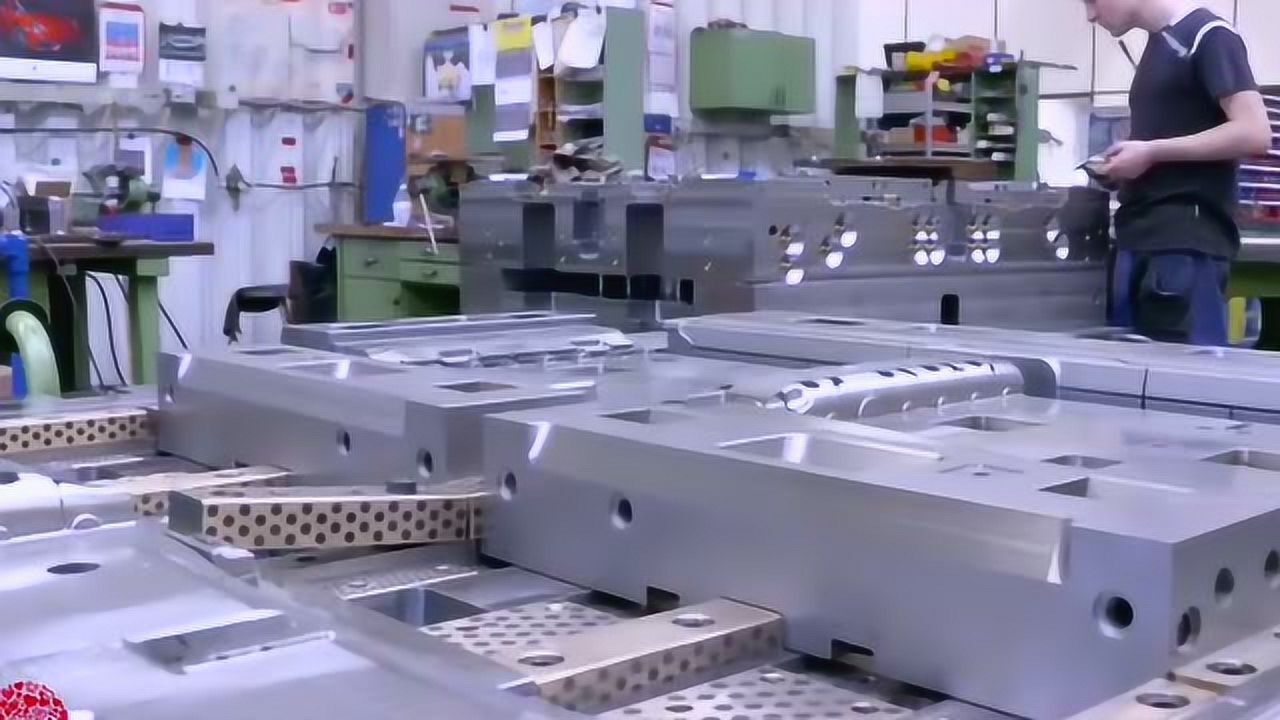
In the mold industry, technical progression bears a striking resemblance to the ancient apprenticeship system—where a craftsman’s “graduation” is earned through years of relentless practice and scrutiny. Take injection mold making, the most common discipline in our field. A young bench fitter starting out must first endure three years of foundational work: grinding, fitting, and reading complex blueprints. This phase is the equivalent of the “county exam” in imperial China’s civil service tests. The criteria are unforgiving—the parting line you grind must achieve a flatness tolerance within 0.02 mm, and the guide pin holes for a slider’s angled lifter must be positioned within ±0.01 mm. If these basics are not mastered, every subsequent step—whether it’s designing a multi-stage ejection system or a core-pulling mechanism—is built on sand.
Beyond manual skill, the modern mold engineer must also integrate computational precision with shop-floor reality. For instance, when designing a complex slider with a hydraulic core pull, the angle of the wedge (typically 18° to 25°) and the wear allowance on the wear plates are not arbitrary—they are calculated based on the plastic’s shrinkage rate and the clamp tonnage of the press. A seasoned engineer knows that a 0.005 mm interference fit on a core insert can mean the difference between a clean eject and a stuck part. This is where the “provincial exam” of our trade lies: not just in drawing the 3D model, but in foreseeing thermal expansion, shear stress, and cycle-time fatigue. Real-world debugging on a 200-ton injection machine often reveals that the theoretical draft angle of 1° needs to be adjusted to 1.5° to avoid surface drag marks on a glass-filled nylon part.
Only after years of such iterative troubleshooting—what we call “burning the midnight oil at the mold trial”—does a technician truly earn the title of “master.” The final test is not a written exam but a production run: a 32-cavity hot runner mold for a medical connector, holding a dimensional repeatability of ±0.005 mm over 500,000 cycles without a single flash defect. That is the “palace exam” of our profession. The industry is evolving, but the principle remains—precision, patience, and practical wisdom. For those seeking reliable mold partners or technical insights, visiting MoldWorld (www.moldw.com) offers a comprehensive directory of suppliers and engineering resources to guide your next project.